I want to preface by saying that your birth should be YOUR choice. How you plan to birth, who you want be present, where you give birth – it all should be your ultimate decision and approval. But these decisions shouldn’t be made without doing research and understanding your birthing rights. It’s so important that you have the tools to advocate for your health.
My first baby was born in the hospital, and while it was the most incredible birth experience of my life, I had to fight for it every step of the way when my medical providers kept pressuring me with unnecessary interventions. I can 100% say I would not have had the amazing drug-free birth I had without the guidance of my bad ass doula (turned midwife) Becky Hines with Dallas Birth. (Read the whole birth story!)

For my second birth, I knew I wanted to do things on my own terms. As a healthy and low-risk mom, I was a great candidate for an out-of-hospital birth. I had my first home birth with Becky *as my midwife* in the height of the 2020 pandemic. In a time of so much fear and chaos, my birth experience was nothing but.
1. A pandemic-free experience. Through my midwife group, I was able to bring my husband and my son to all of my appointments and ultrasounds. At my birth, I was able to have whomever I wanted present, including my toddler who was a much-needed distraction. I didn’t have to breathe through a mask during labor, or fear that my family or doula couldn’t be present. It was the birth of my dreams. (Read that story here.) With the pandemic spiking again now in 2021, I’m comforted knowing I will be able to have the same experience with baby #3.

2. The comfort of my home. I had the choice to birth at the birthing center or in my home. I ultimately decided to do it at home because I was most comfortable there, and the midwives bring everything to your home that they would have at the birthing center (oxygen, IVs, meds like Pitocin to stop or slow a hemorrhage, tools for suturing in case of a tear, etc.) At the birthing center, it’s standard for you to leave 4-6 hours after labor. It was more comforting for me to just stay at home and fall asleep in my bed with my baby and husband shortly after delivery. It was the best sleep imaginable. Also, my birth team cleaned up everything! You couldn’t even tell I had birthed in my bedroom. My midwife visited us the next day and made multiple postpartum home visits to check on both me and my son. Midwifery care is so deeply personalized.
3. Freedom of movement. During my homebirth, I was free to move around, take a bath, eat and drink freely, walk outside if I wanted, and visit with my toddler. I had the freedom to do anything. In the hospital, when you have an epidural, IVs or continuous electronic fetal monitoring (EFM), you’re confined to a bed, and typically not allowed to eat. Freedom of movement makes labor easier and oftentimes faster. Trust me, it wasn’t a walk in the park, though. My doula, my husband, and I worked hard the entire time doing those dreadful labor positions to move the baby down the birth canal and to get me into transition. I did not stop working.

4. I wanted to avoid “the cascade of interventions.” The United States has one of the highest C-section rates in the world (roughly 1 in 3 American women end up having a C-section). This is also a factor in why we have one of the highest maternal mortality rates in the developed world. And I don’t share this to scare you, but to shed light on facts that a lot of doctors don’t break down upfront.
Of course, C-sections are sometimes medically necessary. But each unnecessary birth intervention has the potential to lead to more interventions that raise your potential to end with a C-section. During unmedicated labor, the hormone oxytocin is released, it sends signals to your uterus to contract, and it sends signals to your brain to release endorphins, which are considered to be nature’s painkillers. Epidurals, IV fluids, and narcotics can all interfere with these natural hormones and slow labor down.
For example, if a mom gets an epidural, labor is likely to slow due to the medication and the IV fluid, which may mean your doctor will give you the drug known as Pitocin to get labor moving again. Pitocin creates intense and frequent contractions that don’t allow mom or baby rest, which can reduce the oxygen supply to the baby. If the baby becomes distressed, doctors strongly suggest moving to a C-section. Epidurals also cause mom to not be able to feel her legs and lower body, making it hard to switch positions when it would be most helpful. If you can’t feel your body contracting, you can’t push at the proper time with the right force to help baby come down, often resulting in a harder, longer labor.
For women who plan to have a birthing center or home birth, the hospital transport rate is about 10% (Cheney, 2014). But out of that 10%, not all of those women have C-sections, many have become exhausted from a long labor and choose to get an epidural at the hospital. Simply planning for an unmedicated delivery with certified midwives reduces your risk of having a C-section from ~30% to about ~5%. And hiring a doula decreases your risk of a C-section by 60-80%.

5. I wanted to meet my baby without drugs in either of our systems. The more drugs that are pumped into mom’s body, the more baby has to recover from, as well. Narcotic pain relief can cause side affects in the baby such as central nervous system depression, respiratory depression, impaired early breastfeeding, decreased ability to regulate temperature, and altered neurological behavior. Unmedicated newborns tend to be much more alert and content, they tend to breastfeed better, and their temperature, blood sugar, heart rate, and respirations tend to be more stable.
Narcotics can also cause side effects to mom such as: grogginess, nausea and vomiting, feeling “out of it” or itchiness.
6. Recovery is easier. I was up walking and peeing 20-30 minutes after labor, which is normal and encouraged for drug-free births. Many unmedicated births also result in little-to-no tearing. (This wasn’t the case for me the first time – I had a second-degree tear with Levi. For my second birth, I had no tearing but I prepped for labor ahead of time by doing perineal massages.)
And without drugs, there are no concerns for epidural side effects such as back pain, injection site reactions, itching from medication, etc.
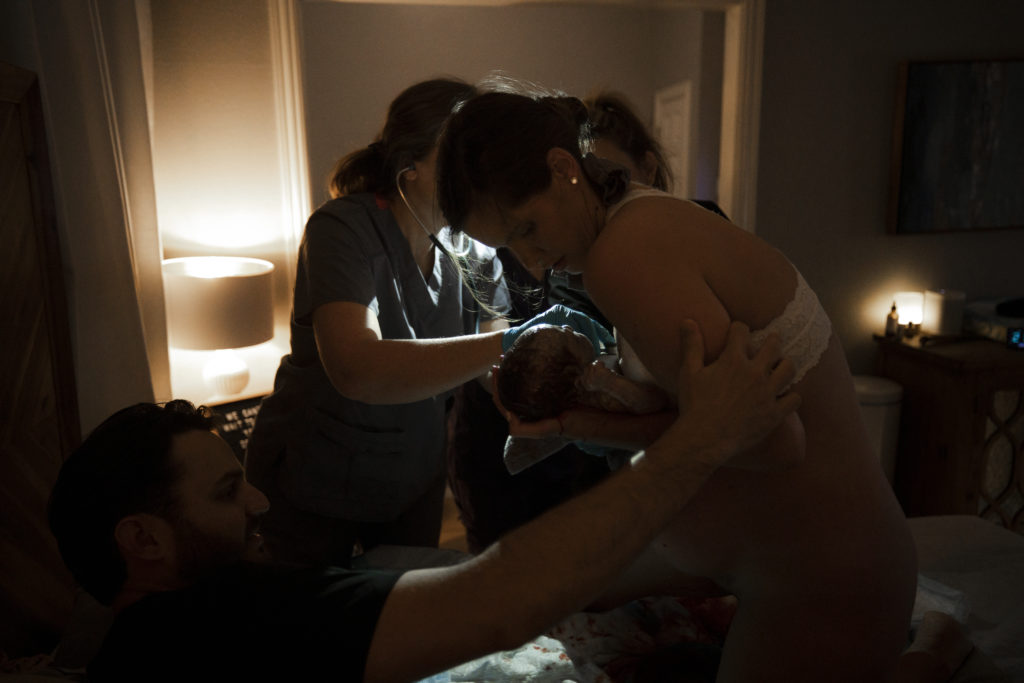
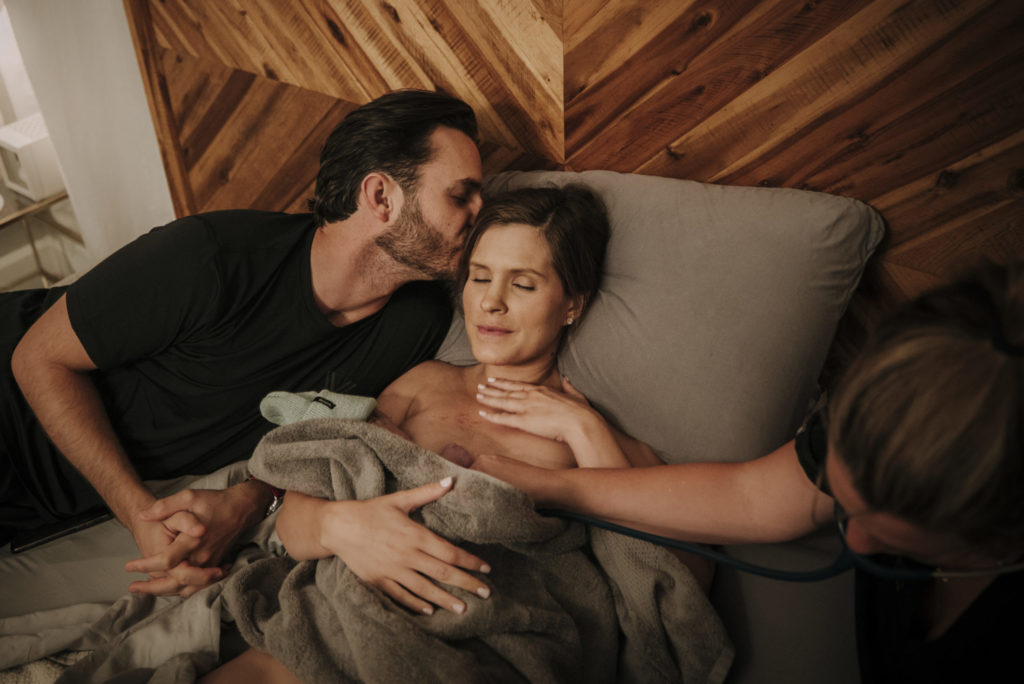
7. The natural high. I had read about the feeling of euphoria that can come from unmedicated birth and I wanted that experience more than anything. I was on a natural oxytocin high for many, many weeks after labor. And my energy level was so elevated, I felt like I was living on cloud 9, which also aids in reducing postpartum depression. When birthing with drugs, it can take several hours for an epidural to subside or you may feel groggy from the narcotics. The need for pain medication is much less following unmedicated birth because of the lack of intervention that was needed.
8. It’s less expensive. Having a hospital birth in the U.S. can be very pricey. Fees include, prenatal care, extra ultrasounds, hospital fees, like, anesthesiologist fee, C-section fee, etc. It can add up fast. Midwifery care can be significantly less expensive. Some reports say birthing center/home birth care ranges from $2,000-$7,000, while a vaginal hospital birth can range from $10,000-$15,000. And the postpartum care you receive with midwives is top notch and so beneficial for mom’s mental and physical health.
It’s so important to remember that birth is not a one-size-fits all experience. Some women report having easy, short epidural labors, while other women report having hard, long unmedicated labors. Every woman’s body is so different, and home birthing is what works for me, however it may not be the right option for you.
But one thing remains – you should always research your birthing rights and have a birth plan in place so you’re not pressured to do anything you’re not comfortable with. Leave your birth knowing that you advocated for you and your baby and you ended with the best possible outcome, no matter what is was. Happy and safe birthing, mamas.